

Key Takeaways
- Behavioral or mood changes from memory loss are often a sign of unmet needs, such as discomfort, frustration, or confusion
- A patient response and a calm, structured environment can significantly improve your loved one’s well-being
- Dedicated memory care in a senior living community provides specialized support, safety, and social engagement
- Options like respite care offer valuable support for both you and your loved one when family caregivers need a break
Notice How a Loved One’s Behavior Has Shifted
It can be confusing and concerning when you see changes in a loved one’s behavior. The person you know so well might start acting in ways that seem out of character, and you may wonder what’s happening and how you can help.
These shifts are a common experience for families navigating the challenges that can come with age. All American Assisted Living at Wrentham is a community that understands these concerns, especially when they might be the early signs of memory loss.
Understanding these changes is the first step toward providing compassionate, effective support that helps your loved one feel safe and understood.
These behaviors are often a way of communicating needs, fears, or frustrations when words become difficult to find. With patience and the right approach, you can continue to build a strong, positive connection.
Common Behavior Shifts You May Notice
As memory changes, you might see several different shifts in your loved one’s daily life. These are not intentional actions but rather responses to the new challenges they face. Recognizing these potential warning signs can help you respond with more empathy and understanding.
Changes in Mood or Personality
A loved one who was once outgoing may become withdrawn, or a calm person might seem easily agitated. These mood shifts are often unpredictable and are often linked to confusion or a feeling of losing control over one’s own life and surroundings.
Difficulty with Familiar Daily Tasks
Familiar tasks like preparing a meal or getting dressed may become overwhelming. You might notice your loved one struggling to follow a recipe or forgetting the steps to a routine they’ve done for years. The experience can be a source of deep frustration for them.
Confusion About Time or Place
Your loved one might lose track of seasons or become disoriented in familiar places, like their own neighborhood. These are some of the warning signs of cognitive issues that can lead to feelings of being lost and insecure.
Why Do These Changes Happen?
Understanding the root cause of these behavioral changes can transform how you see the situation. Instead of seeing a problem, you can begin to see a person trying their best to navigate a confusing world. The changes are often a direct result of their internal struggles.
A Response to Frustration or Confusion
Actions like agitation are often an outward expression of an internal struggle. When you understand how dementia affects the brain, you can see why these behaviors can be your loved one’s way of coping with a world that no longer makes complete sense.
New Challenges with Communication
When words are hard to find, people communicate in other ways. That’s why it’s helpful to learn how to talk to someone with dementia, using strategies that help families understand how behaviors and feelings express what their loved one can no longer communicate verbally.
For example, restlessness might signal discomfort when they can no longer say, “I don’t feel well.” Looking beyond the behavior to find the unspoken need is key.
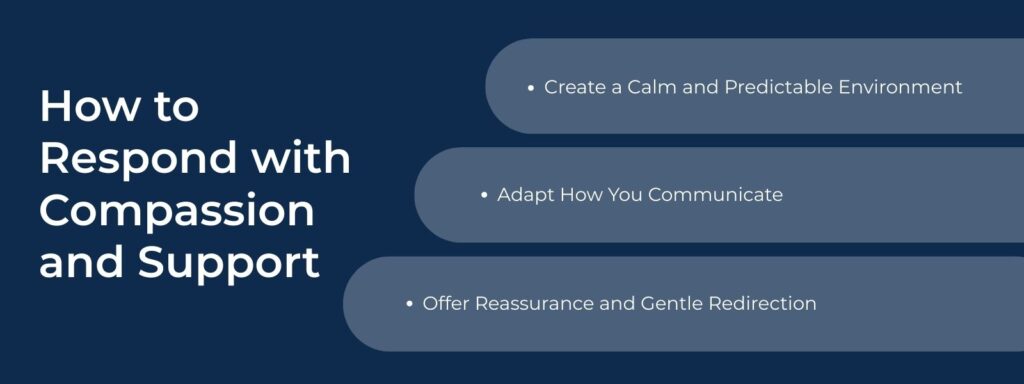
How to Respond with Compassion and Support
Your response can have a powerful impact on your loved one’s well-being. A compassionate and patient approach can de-escalate stressful situations and help them feel more secure. It’s all about adjusting your own actions to support their needs more effectively and compassionately.
Create a Calm and Predictable Environment
Routines help provide stability when their internal world feels chaotic. Try to keep mealtimes and other activities predictable. Reducing clutter and loud noises can also help minimize agitation and confusion.
Adapt How You Communicate
Make communication easier with simple adjustments. Approach your loved one from the front, make eye contact, and speak in a calm, gentle tone. Ask one question at a time, using yes-or-no and this-or-that options. A reassuring touch on the hand can also speak volumes.
Offer Reassurance and Gentle Redirection
If your loved one is confused or upset, avoid arguing or contradicting. Instead, validate their feelings by saying something like, “I can see you’re upset.” Listening can help you understand the source of their distress—such as discomfort or loneliness—and offer support.
You can help manage challenging dementia behaviors by gently redirecting their attention to a pleasant activity, like listening to a favorite song.
The Role of a Supportive Senior Living Community
Sometimes, providing the necessary level of care at home can be challenging. A supportive senior living community can offer an environment designed to help individuals with memory loss live with dignity and joy. These communities focus on what a person can do, not what they can’t.
Focus on Personalized Care
A community can offer care tailored to your loved one, from help with daily activities to specialized memory care programs.
These programs use cognitively stimulating and emotionally engaging events to create positive experiences. The personalized support helps foster connections and encourage independence, creating days filled with purpose and companionship.
A Safe and Nurturing Home
A well-designed memory care community offers more than just safety—it offers a sense of home. With secure and comfortable living spaces, residents can move around freely. Compassionate caregivers are always available to offer support, helping residents feel part of a caring family.
A New Beginning with Compassionate Support
All American Assisted Living at Wrentham is a community focused on creating a warm and fulfilling lifestyle tailored to each person’s unique story.
It’s about more than care—we want to help our residents experience an enriching lifestyle where their needs are met with compassion, understanding, and dignity.
When you’re ready to explore a community that feels like family, reach out to schedule a tour and see the possibilities for yourself.