
Key Takeaways
- Steady balance supports walking, standing, and everyday independence.
- Gentle and supported exercises can be great places to start.
- A 10-minute daily routine can build strength over time.
- Group fitness classes make practice easier and more social.
Why Steadiness on Your Feet Matters
You reach for a cup on the top shelf, turn quickly to answer the door, and for a second, the room seems to tilt. That little wobble can make you think twice about things you used to do without a second thought. Assisted living can provide support with everyday activities when balance becomes more difficult.
Balance exercises help you stay steady, mobile, and independent, and many of the most helpful moves take just a few minutes a day with nothing more than a sturdy chair. Pair them with an active aging mindset, and the results can surprise you.
Why Balance Matters as You Age
Balance and strength help you move safely through everyday activities, from walking to the mailbox to carrying laundry. While muscle strength naturally changes with age, regular, gentle exercise can help maintain strength and stability.
Balance also depends on a few things working together. Changes in vision, certain medications, and inner ear shifts can all leave you feeling less grounded. Once you know what’s playing a part, you can adjust your routine to suit you.
Simple Balance Exercises to Try at Home
Chair-Supported Moves
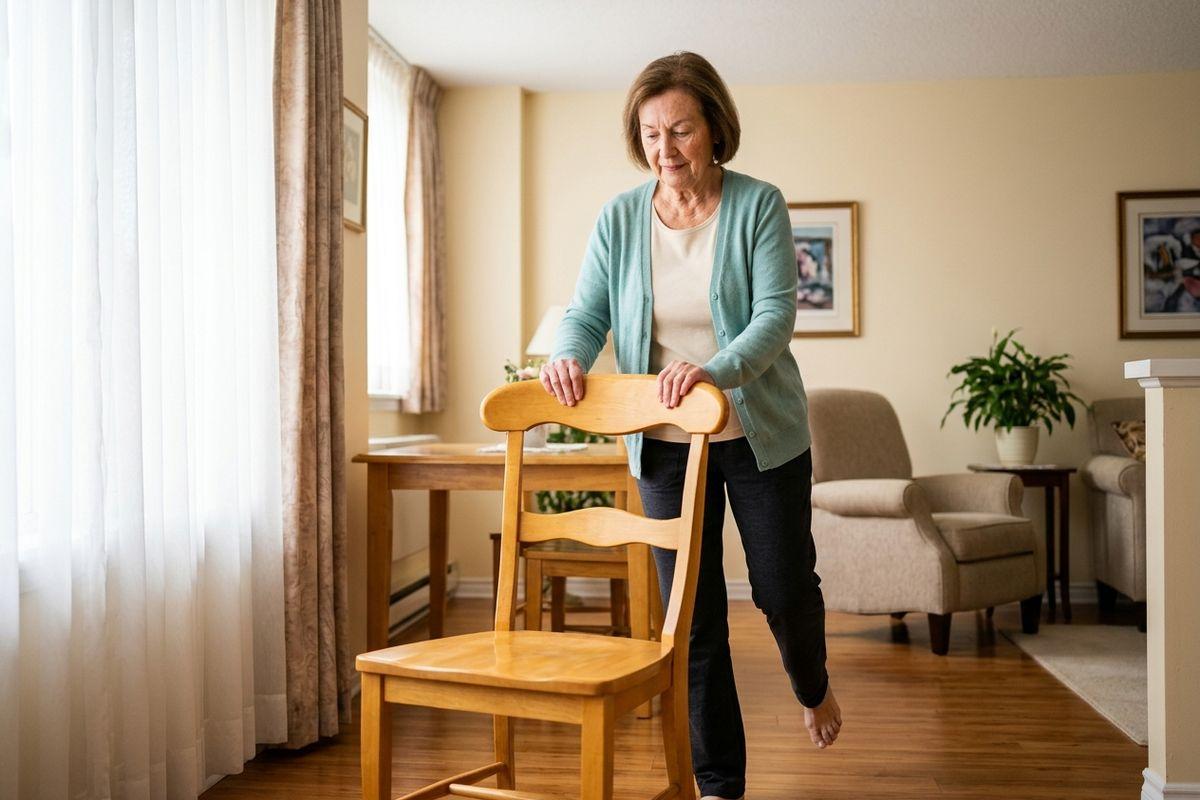
Place a sturdy chair in front of you and rest your hands lightly on the back. This gives you something to hold if you need support. Try a single-leg stand by lifting one foot slightly off the floor while holding the chair. March in place with 20 alternating knee lifts.
Heel raises lift your heels until you are on your toes to work your calves. Toe raises involve rocking back onto your heels while lifting your toes. Move slowly and focus on movements rather than speed. Stop if you feel unsteady or pain; these balance exercises for older adults reward patience.
Hallway Walk Exercises
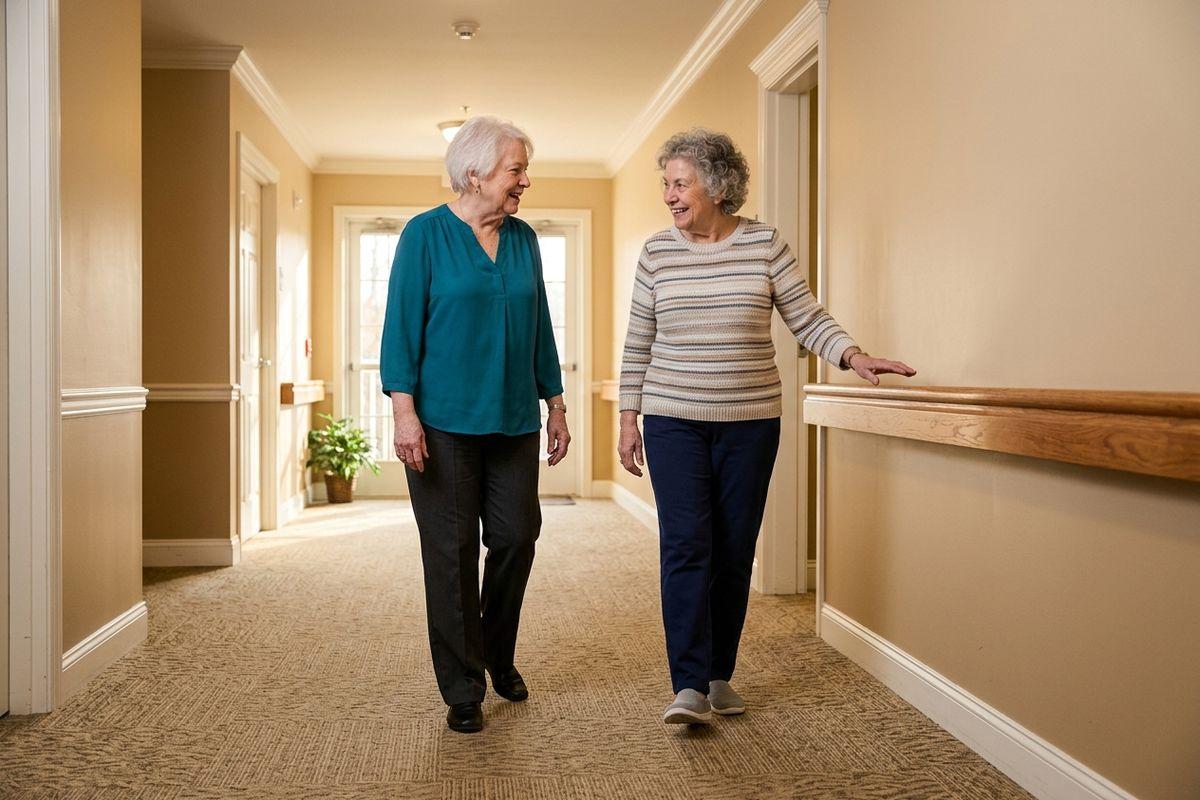
Walk-based exercises help you practice steadiness while you’re actually in motion. Try them along a hallway where a wall stays within arm’s reach.
The heel-to-toe walk asks you to place the heel of one foot directly in front of the toes of the other, taking about 20 steps. The tightrope walk is similar, following a straight line on the floor with your arms out to your sides.
Seated & Gentle Options
If standing exercises feel difficult, chair-based exercises can help build strength while seated. They can be a useful option for people with limited mobility, with a range of exercises that can be adapted to different ability levels.
- Sit-to-stand, rising from a sturdy chair and lowering back down
- Chair yoga poses that stretch and steady you
- Basic tai chi movements with their slow, flowing pace
- Seated marching, lifting your knees one at a time
How to Build a 10-Minute Daily Routine
Start with 2 or 3 exercises and a small number of repetitions. As the movements become familiar, gradually increase the repetitions. During balance exercises, focus on a fixed point, such as a spot on the wall, which may help you stay steady.
You can also combine balance exercises with a short walk or gentle stretches. Aim for about 10 minutes of movement on most days rather than doing a longer session only occasionally. Choose activities that match your comfort and ability level.
Safety Tips & Moves to Approach Slowly
For safer practice, keep a wall, sturdy chair, or walker nearby so you have support when needed. Take breaks between exercises rather than pushing through fatigue, and keep water close by. Wear shoes with firm, supportive soles and good traction, and clear other tripping hazards from your practice area.
Some movements are worth approaching slowly or saving for another day. High-impact jumps, quick twisting motions, and deep forward bends can throw off your footing. There are gentler ways to reach the same goal.
How Assisted Living Supports Balance & Movement
Group Fitness and Daily Encouragement
Exercise feels different when you’re doing it beside people you enjoy. Group fitness classes in senior living turn balance work into something social, with laughter, music, and a friendly instructor guiding the pace.
Caregivers are there too, offering a steady hand when you want one and a gentle reminder on days motivation runs low. That kind of daily encouragement helps a routine actually stick.
Next Steps Toward a Steadier Day
Small habits can support steady progress. A few minutes of marching, a slow heel-to-toe walk down the hall, or a sit-to-stand before lunch can add movement to your daily routine. Over time, these activities may help you feel more comfortable and steady as you move through the day.
At All American Assisted Living at Wrentham, residents have opportunities to stay active, connect with others, and take part in daily activities. Schedule a tour to meet the care team and see the community spaces.