
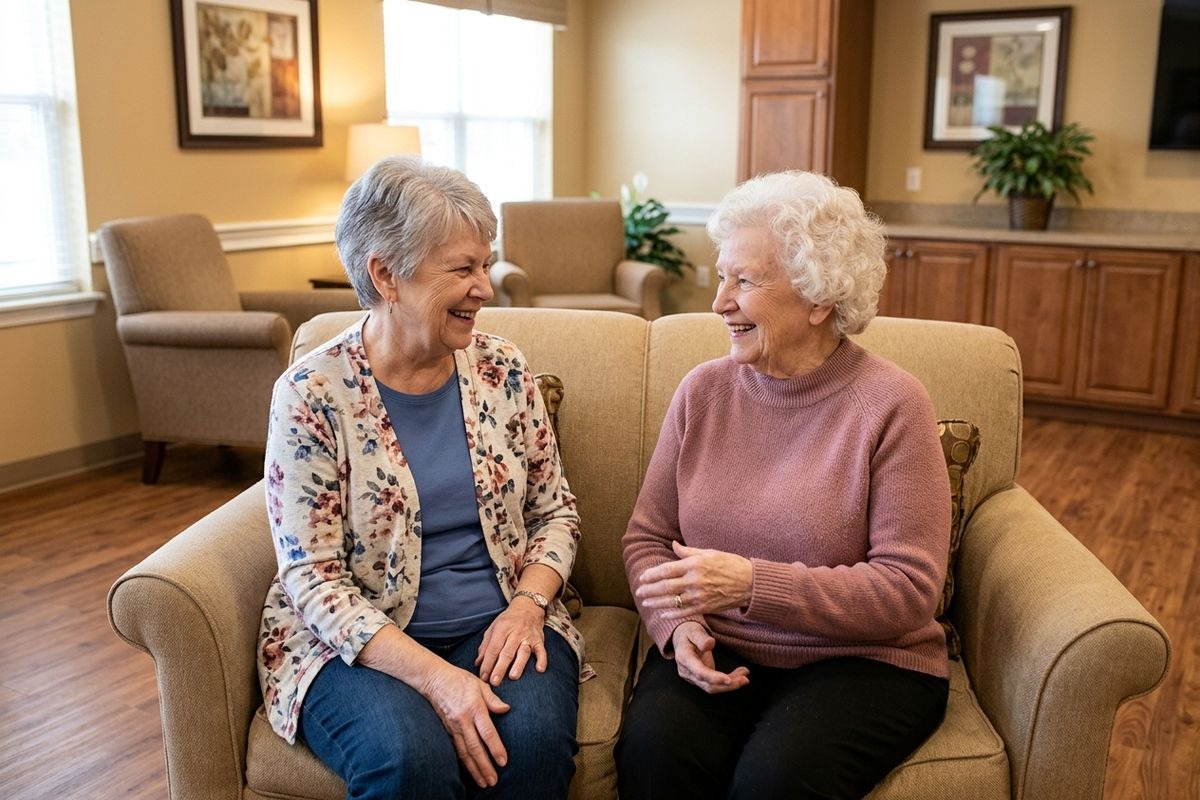
A pair of older adults sits together on a comfortable couch, enjoying companionship in senior living.
Key Takeaways
- Companion care provides daily emotional support, social connection, and personalized attention
- Regular companionship can lift mood, reduce feelings of isolation, and support a sense of belonging
- Compassionate help with daily tasks respects dignity and encourages independence
- Families can gain genuine peace of mind knowing their loved one has consistent, caring support
- Assisted living communities can offer a rich social environment and daily events for fulfilling days
The Real Value of Companion Care for Seniors
If you’ve been wondering whether your loved one is getting enough connection and support in their daily life, you’re not alone.
Many families reach a point where they want something more for the people they love, not just physical care, but genuine companionship and warmth.
All American Assisted Living at Wrentham is built around exactly that kind of thoughtful, person-centered approach.
Companion care in assisted living can give your loved one a consistent, caring presence that supports their emotional well-being, independence, and overall quality of life.
It’s about so much more than help with tasks. It’s about making each day feel meaningful and full.
What Companion Care in Assisted Living Actually Looks Like
Companion care isn’t a one-size-fits-all approach. It’s thoughtfully shaped around each resident’s personality, preferences, and daily rhythms.
A caregiver might spend a morning chatting over coffee, join a resident for a favorite activity, or simply sit together and enjoy a quiet moment. Over time, that steady, familiar presence helps build real trust.
Residents come to know and feel comfortable with their caregivers, which makes the whole experience feel natural and warm rather than clinical or formal. It’s a relationship, not just a service.
From personalized daily support to shared laughter and genuine emotional connection, companion care weaves meaningful moments into everyday life. That consistency is what helps residents truly settle in and feel at home.
You can explore what services assisted living communities provide to get a clearer picture of everything available to your loved one.

A pair of older adults smiling and chatting as they sit together in a cozy senior living common area.
How Companion Care Supports Your Loved One’s Well-Being
Reduced Loneliness and a Brighter Mood
Loneliness can quietly take a toll on a person’s mood and overall health. Regular social interaction, even something as simple as sharing a meal or joining a group activity, can make a real difference in how someone feels each day.
Social isolation introduces real health risks for older adults, making consistent companionship a valuable part of wellness.
When your loved one has a friendly face to look forward to and activities that spark joy, life feels fuller. Companion care creates those everyday moments of connection that lift spirits and nurture a genuine sense of belonging in the community.
Preserved Dignity and Independence
Companion care is rooted in respect. Caregivers offer compassionate help with daily tasks while always encouraging residents to do what they can for themselves. The goal is to support, not take over.
That balance matters deeply. When your loved one feels capable and respected, their sense of self in day-to-day life grows naturally.
Every small win, making a choice, completing a task, or going somewhere they enjoy, reinforces their sense of autonomy.
A Safer, More Secure Day-to-Day Life
Having a caring, attentive presence nearby helps reduce everyday risks, such as falls and accidents. When someone is paying attention and genuinely invested in a resident’s well-being, small concerns can be caught early before they become bigger issues.
It also means that when a resident needs something quickly, support is close at hand. That kind of responsive care brings a layer of security that both residents and families find genuinely reassuring.
The Relief Companion Care Brings to Families
If you’ve been the primary caregiver for a loved one, you know how emotionally and physically demanding that role can be. Companion care in an assisted living community allows you to step back from that role without guilt or worry.
If caregiver fatigue has been weighing on you, learning about ways to prevent caregiver fatigue can be a meaningful first step.
Knowing that your loved one has a warm, consistent team looking after them changes things. You can visit as a son, daughter, or spouse again, rather than always as a caregiver, watching for what might go wrong.
That shift can be incredibly freeing for the whole family.
A community can lift the weight of trying to manage everything alone. You don’t have to coordinate every detail or worry about coverage gaps. The community team handles it, and your loved one can benefit every single day.
Companion Care vs. Staying Home Alone
The Social Gap at Home
At home, days can pass with very little meaningful interaction, especially if mobility or transportation makes getting out difficult.
That quiet can feel comfortable at first, but over time it can lead to real feelings of isolation and disconnection.
An assisted living community offers something a private home often can’t: a built-in neighborhood of friendly faces ready to share a conversation, a game, or a walk outside.
How Assisted Living Fills That Gap
Group activities, shared meals, and vibrant common spaces mean there’s always an opportunity to connect. Your loved one doesn’t have to seek out companionship because it’s naturally woven into daily life.
You can browse weekly events and activities to see just how much is happening each day.
Care plans evolve as needs change, whether that means assisted living, memory care, or respite care after a hospital stay. The right support is always there, growing alongside your loved one’s journey.
Finding the Right Fit for Your Loved One
When you’re looking for a community, pay attention to warmth, consistency, and how well the team takes time to understand each resident as an individual. Those qualities make all the difference in daily life.
Think about what your loved one truly needs right now, and what they might need down the road. Options like assisted living, memory care, and respite care give your family flexibility and the right level of support at every stage.
Seeing it all come to life in person is the clearest way to know if it’s the right fit. At All American Assisted Living at Wrentham, the door is always open. Visit us for a tour and see firsthand how companion care can give your loved one a warm, fulfilling place to call home.